
“What can I actually become after hotel management?” It is the question every student and parent asks, and it deserves a straight answer.
The short version: hotel management is one of the most versatile career paths you can choose. Your training travels with you, from a five-star lobby to a luxury cruise liner, from an airline cabin to a mountain resort. This guide walks through the main career routes, the roles inside each one, and what you need to get there.
If you are still deciding on the course itself, you can read about the 4-year Hotel Management programme at DSMS alongside this guide.
Why Hotel Management Opens So Many Doors
Hospitality is built on a few skills that every employer values: communication, service, teamwork, grooming, problem-solving and staying calm under pressure. A hotel management course trains all of these, plus practical operations across front office, food and beverage, housekeeping and kitchen.
Because these skills are used across industries, your career is not limited to one workplace. For a deeper look at this, see our post on how hotel management skills open career opportunities beyond hotels.
1. Careers in Hotels
This is the classic and still the biggest route. Hotels range from boutique stays and business hotels to large international chains.
Common departments and roles:
- Front Office: Guest relations executive, front desk associate, reservations executive, front office manager
- Food and Beverage Service: Restaurant steward, banquet coordinator, bar associate, F&B manager
- Kitchen / Food Production: Commis chef, chef de partie, pastry and bakery chef, executive chef over time
- Housekeeping: Housekeeping executive, floor supervisor, executive housekeeper
- Sales and Revenue: Sales executive, revenue analyst, event sales coordinator
Growth path: Most people begin as trainees or associates, move to supervisor, then to department head, and later to general manager. Strong performance and good guest feedback speed this up.
Best for you if: You enjoy hands-on work, like variety every day, and want a clear ladder to management.
2. Careers on Cruise Ships
Cruise ships are floating hotels, and they hire a large number of hospitality professionals.
Common roles:
- Food and beverage service staff and stewards
- Galley and kitchen team, including cooks and bakers
- Guest services and reception
- Housekeeping and cabin services
- Bar and restaurant supervisors
What makes it different: You live and work on board, you travel to many destinations, and you work with an international team. Contracts are usually for a fixed period followed by a break at home.
What you will need: Good spoken English, strong fitness and grooming, a valid passport, and basic safety and sea-survival training that cruise lines require. Specific requirements differ by cruise company, so always check with the employer or an authorised recruiter.
Best for you if: You love travel, can adapt to a new environment quickly, and are comfortable being away from home for long stretches.
3. Careers with Airlines
Airlines look for people who can deliver service in a fast-moving, high-standard environment, which is exactly what hotel management students practise.
Common roles:
- Cabin crew / flight attendant: Passenger safety and in-flight service
- Ground staff: Check-in, boarding and customer service at the airport
- Airport lounge and guest services: Premium passenger care
- In-flight catering and airline kitchens: Meal planning, production and quality control
What you will need: Excellent communication, a confident presentation, a calm approach in emergencies, and the willingness to work shifts. Eligibility details such as age, language and fitness standards vary by airline, so read each recruitment notice carefully.
Best for you if: You enjoy meeting new people, like structure and standards, and want a role where no two days are the same.
4. Careers in Resorts and Luxury Hospitality
Resorts, spas, heritage properties, wellness retreats and destination hotels offer a different pace from city hotels. Guests stay longer, expect personalised service and often look for experiences, not just rooms.
Common roles:
- Resort operations executive
- Guest experience coordinator
- Spa and wellness operations associate
- Activities and recreation coordinator
- Events and destination wedding coordinator
Best for you if: You enjoy creating memorable experiences and like working in scenic, hospitality-led environments.
5. Other Paths Worth Knowing About
Hotel management also leads to careers that do not look like “hotel jobs” at first:
- Event and wedding management
- Travel and tourism companies
- Restaurant and cafe operations, including starting your own
- Catering and cloud kitchens
- Hospital and healthcare hospitality services
- Corporate facilities and guest services
- Teaching, training and hospitality consulting
If you like building your own thing, you can also explore entrepreneurship. The DSMS Incubation Center supports student ideas, which can be a useful starting point for a cafe, bakery or catering venture.
What Skills Will Help You Succeed in Any of These?
Communication: Clear, polite speech in English and your local language.
Grooming and presence: First impressions count in every guest-facing role.
Teamwork: Hospitality runs on shifts and handovers.
Problem-solving: Complaints, delays and last-minute changes are daily realities.
Basic technology skills: Booking, billing and property management systems are part of the job.
Hands-on practice: Nothing replaces real kitchen, restaurant, front office and housekeeping experience.
How Your College Shapes Your Career
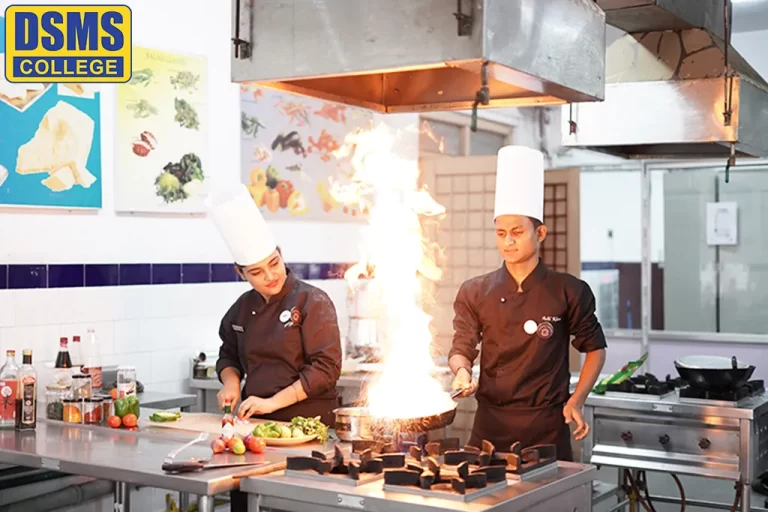
Which route you take depends partly on the exposure you get during your degree. Practical labs, industrial training, guest lectures, live events and a dedicated placement cell all help you discover where you fit.
At DSMS Durgapur, the placement cell works with hospitality and other industry employers. The institute’s alumni are working at organisations including Marriott Group, IHG Group, ITC, TATA and MakeMyTrip. Students can also take part in the college clubs and events to build confidence, leadership and event experience before they graduate. You can see what life on campus looks like in the college gallery and the hostel facilities for outstation students.
If you want to compare programme length and what each pathway involves, our post on the 4-year hotel management degree vs 3-year diploma is a helpful next read.
Final Thoughts
Hotel management is not one career. It is a launchpad. You can start in a hotel and move to a cruise ship, begin with an airline and later open your own restaurant, or grow within a resort group into senior management. The best route is the one that fits your personality, your goals and the kind of life you want to build.
Start by building solid skills, gather as much practical experience as you can, and keep your options open.